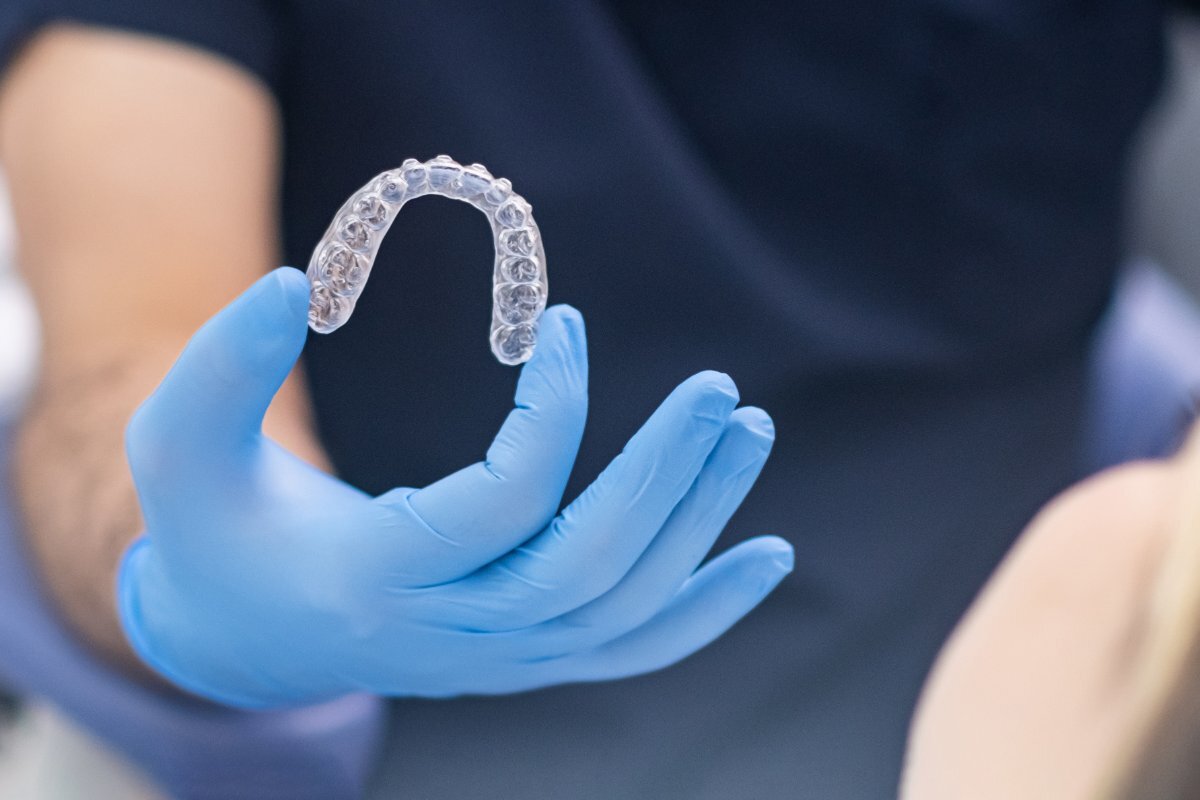


Are you considering Invisalign or just getting started on your clear aligner journey? If so, you’ve likely heard a number floating around: 22 hours. Maybe 20 hours. But let’s be honest—when you’re trying to balance meals, coffee breaks, meetings, and a social life, those two hours of freedom seem to disappear fast!
You’re staring at a piece of clear plastic that promises a beautiful, straight smile, and you’re wondering, Do I really need to be this strict? What happens if I fall short?
The truth is, your dedication to wearing time is the single most critical factor in the success and speed of your treatment. Let’s dive into the science, the complex numbers, and the simple habits that ensure you get the smile you paid for—on time.
The Golden Rule: 20 to 22 Hours Daily
Straight from the source and supported by orthodontic science, the clear consensus is that you must wear your clear aligners for 20 to 22 hours every single day to achieve optimal results.
Why is this number so non-negotiable?
Invisalign works by applying a constant, gentle pressure that gradually shifts your teeth into the correct position. This process, known as orthodontic tooth movement, is highly dependent on time under tension. When you remove your aligners, the continuous pressure stops, and your teeth can begin to drift back toward their original positions—a phenomenon known as relapse.
- The Math: If you aim for 22 hours, that leaves you with just two hours total in a 24-hour day for all eating, drinking (anything but plain water), brushing, and flossing.
- The Science: According to the American Association of Orthodontists (AAO) and multiple clinical studies, consistent pressure over a significant period is crucial for predictable tooth movement.
The Data on Compliance and Success
Your orthodontist in Dallas isn’t just being strict; they are following data-driven protocols. Clinical research consistently shows a strong link between wear-time compliance and successful outcomes:
- Predictability: Studies have found that patients who wear their aligners for the recommended 20+ hours per day those with lower compliance.
- Success Rates: While traditional braces have a high success rate (approximately 95%) across all case types, the success rate for clear aligners in mild to moderate cases ranges from 80% to 96%, depending heavily on patient adherence to the wear schedule.
- The Cost of Non-Compliance: Consistently failing to meet the target can lead to your teeth not “tracking” properly with the aligners. This results in the need for refinement trays or an extended treatment duration, potentially adding weeks or months to your original plan.
An extensive retrospective study of clear aligner patients found that only 36.0% of patients demonstrated “full compliance” (strict adherence to the wear schedule), while 38.3% showed “fair compliance” and 25.7% showed “poor compliance.” The message is clear: the dedication required is challenging, but it is the key to finishing on time.
Tips for Hitting Your 22-Hour Target
Making the 20-22 hours a day work with your busy life requires a commitment to routine.
- Be a Scheduled Eater: Limit snacking. Try to structure your meals into three main events. If you take 30 minutes for breakfast, 45 minutes for lunch, and one hour for dinner, that’s just 2 hours and 15 minutes of “off” time, keeping you safely within the 2- to 4-hour window.
- Use an App or Timer: Don’t rely on your memory. Use a countdown timer on your phone or an aligner-tracking app to monitor the exact amount of time your aligners are out of your mouth. Every minute counts!
- The Night Shift: The 7-8 hours you spend sleeping are your most valuable uninterrupted wear time. This block is essential for meeting your goal and for helping new aligners feel more comfortable.
- The Case is Your Friend: Always, always put your aligners back in their case when they are out of your mouth. This prevents them from being lost, damaged, or forgotten on a plate or napkin.
The Bottom Line
The success of your Invisalign treatment in Dallas hinges on one factor more than any other: consistency. While the clear aligners offer the advantage of being removable, that advantage comes with a profound responsibility. Aim for 22 hours a day. Every hour you fall short is an hour your teeth aren’t moving, and that lost time adds up, ultimately delaying results and potentially compromising your beautiful outcome. Your perfect smile is worth the commitment!
Frequently Asked Questions (FAQs)
1. What happens if I miss a few hours one day?
If you fall short of the 20-22 hour goal on an occasional day, it is generally not a disaster, but you should compensate the next day by aiming for the high end of the recommendation (closer to 22 hours). However, repeated inconsistency is what derails treatment and leads to a lack of “tracking.” If your aligners feel tight when you put them back in, it’s a sign that your teeth are already trying to shift back.
2. Can I remove my aligners for a special event, like a wedding?
Yes, you can briefly remove your aligners for a special occasion or a professional photo shoot. However, treat this as an exception, not a rule, and try to keep the time out to a minimum. Remember, any time over the two to four-hour daily limit needs to be made up. If the total removal time for the day exceeds three hours, your doctor may advise you to wear the current aligner set for an extra day or two.
3. Can I drink coffee or soda with my aligners in?
No, you should only drink plain, cool water with your aligners in. Hot beverages (such as coffee or tea) can warp the aligner plastic, while sugary or acidic drinks (like soda or fruit juice) can become trapped under the aligner, potentially leading to tooth decay or staining of the aligner itself. Always remove them, brush your teeth, and rinse your aligners before reinserting them.
4. What should I do if my next set of aligners doesn’t fit?
If your new aligner tray doesn’t fit properly—if it feels extremely tight or there is a noticeable gap between the top of the tray and your teeth (“poor tracking”)—it strongly indicates you didn’t wear the previous tray long enough. Contact Dallas Orthodontics immediately. They may instruct you to return to your last tray and wear it for a few extra days to get the tooth movement back on track before attempting to advance again.
5. Does the wear time change during the course of treatment?
For most Invisalign cases, the recommended 20-22 hours per day remains the standard throughout the active treatment phase. The only time the instruction may change is during the retention phase, where your doctor will prescribe a different wear schedule for your retainer. Always follow the specific instructions provided by your licensed orthodontist in Dallas, TX, as they may adjust the protocol based on your individual tooth movements and progress.