

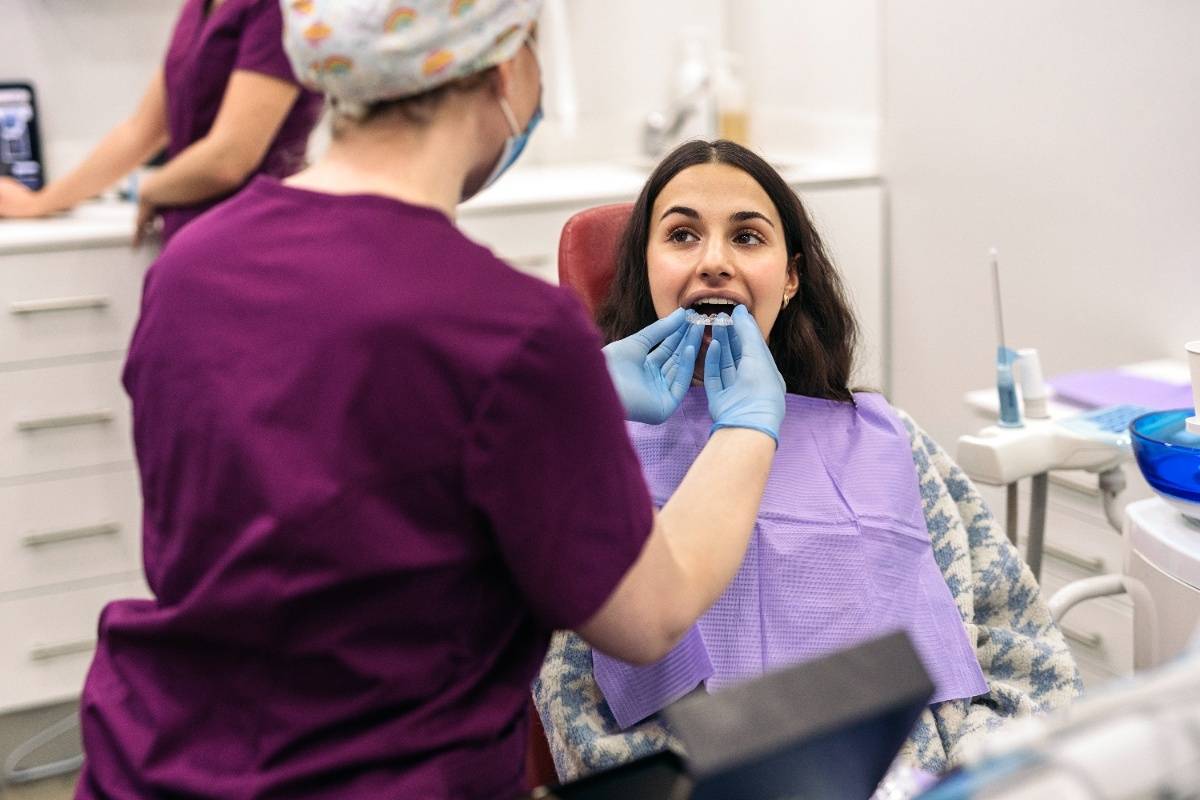
Have you been thinking about straightening your teeth with Invisalign but wondering how long it will take before you notice a difference?
You’re not alone.
One of the most common questions patients ask during an Invisalign consultation is, “How long does Invisalign take to work?“ Whether you’re preparing for a wedding, a job interview, a graduation, or want a healthier smile, understanding the treatment timeline can help you set realistic expectations.
The good news is that Invisalign often begins moving teeth within days of starting treatment. However, visible changes take longer. Most patients start noticing improvements in their smile within a few weeks to a few months, while complete treatment generally takes between 6 and 18 months, depending on the complexity of the case. More advanced orthodontic concerns may require up to 24 months or longer.
Invisalign has become one of the most popular orthodontic treatments in the United States because it offers a discreet and convenient alternative to traditional braces. But achieving great results depends on several factors, including the severity of your alignment issues, your age, and how consistently you wear your aligners.
In this guide, we’ll explain how Invisalign works, when you can expect to see results, what affects treatment speed, and how local patients can stay on track for the best possible outcome.
How Soon Does Invisalign Start Working?
Many patients are surprised to learn that Invisalign starts working almost immediately.
As soon as you begin wearing your first aligner, gentle pressure is applied to your teeth. This pressure stimulates changes in the surrounding bone and tissues, allowing teeth to shift gradually.
While movement begins right away, it usually takes time before those changes become noticeable.
Typical Invisalign Progress Timeline
| Time Period | What Happens |
| First Few Days | Teeth begin responding to aligner pressure |
| 2–6 Weeks | Minor tooth movement may occur |
| 6–8 Weeks | Many patients begin noticing visible improvements |
| 3–6 Months | Significant changes often become noticeable |
| 6–18 Months | Most treatments reach completion |
| 18–24+ Months | Complex cases may finish |
Many patients report seeing subtle improvements within 6 to 8 weeks, especially in cases involving mild crowding or spacing.
What Is the Average Invisalign Treatment Time?
According to clinical treatment data and orthodontic providers, most Invisalign treatments in Dallas are completed within 12 to 18 months.
However, every smile is different.
Average Treatment Times by Case Type
Mild Cases: 3–9 Months
Minor issues may include:
- Small gaps
- Slight crowding
- Minor tooth rotations
Many mild cases can be completed in approximately 6 to 9 months, while very limited corrections may finish even sooner.
Moderate Cases: 12–18 Months
Moderate cases often involve:
- Multiple crowded teeth
- Noticeable spacing
- Mild bite concerns
These are among the most common Invisalign cases and typically require between 12 and 18 months.
Complex Cases: 18–24+ Months
Complex orthodontic concerns may include:
- Severe crowding
- Significant overbites
- Underbites
- Crossbites
- Major tooth rotations
These cases often require 18 to 24 months or longer, especially when refinement aligners are needed.
What Factors Affect How Long Invisalign Takes?
Several variables influence treatment speed.
1. Severity of Your Case
The amount of tooth movement required is the biggest factor.
Small cosmetic adjustments usually take less time than correcting major bite problems.
Research consistently shows that more complex malocclusions require longer treatment periods.
2. How Often You Wear Your Aligners
Patient compliance is one of the most important predictors of treatment success.
According to the American Association of Orthodontists (AAO), Invisalign recommends wearing aligners 20 to 22 hours daily. Patients who remove aligners frequently often experience delays.
Common reasons for delays include:
- Forgetting to wear aligners
- Removing them for extended periods
- Skipping days
- Not following tray-change schedules
Even a few missed hours each day can add weeks or months to treatment.
3. Age
Both teens and adults can achieve excellent Invisalign results.
However, younger patients sometimes experience slightly faster tooth movement because their bone remodeling processes are generally more active.
That said, adults make up a large percentage of Invisalign patients and routinely achieve successful outcomes.
4. Biological Response
Every patient’s body responds differently to orthodontic treatment.
Some teeth move quickly.
Others move more slowly.
Factors that may influence tooth movement include:
- Bone density
- Genetics
- Oral health
- Medication use
- Previous dental treatment
These biological differences can affect overall treatment duration.
5. Refinement Aligners
Many patients require refinement trays near the end of treatment.
Refinements help:
- Improve final alignment
- Correct minor discrepancies
- Enhance bite relationships
While refinements may extend treatment time, they often significantly improve overall results.
Is Invisalign Faster Than Traditional Braces?
In many mild-to-moderate cases, Invisalign may offer shorter treatment times than traditional braces.
A systematic review published in the National Library of Medicine found that clear aligners were associated with shorter treatment duration in certain mild-to-moderate orthodontic cases.
Current treatment comparisons generally report:
| Treatment Type | Average Duration |
| Invisalign | 12–18 Months |
| Traditional Braces | 18–24 Months |
However, severe orthodontic problems may still be treated more efficiently with traditional braces in some situations.
Signs Invisalign Is Working
Many patients worry that nothing is happening during the first few weeks.
Here are signs that your treatment is progressing:
- Aligners Feel Tight Initially: Mild pressure when inserting a new tray usually indicates active tooth movement.
- Teeth Look Slightly Different: Small spacing changes may become visible.
- Improved Alignment: Crowded teeth often begin appearing straighter.
- Better Bite Function: Some patients report improved chewing comfort and bite relationships.
- Positive Feedback from Others: Friends and family often notice changes before patients do.
What Can Slow Down Invisalign Treatment?
Several common mistakes can increase treatment time.
- Not Wearing Aligners Long Enough: This is the most common cause of delays.
- Frequently Losing Aligners: Missed trays interrupt treatment progress.
- Poor Oral Hygiene: Gum inflammation may complicate orthodontic movement.
- Skipping Appointments: Regular monitoring helps identify issues early.
- Changing Trays Too Soon: Advancing aligners before teeth are ready can create tracking problems.
How to Get Faster Invisalign Results
While you can’t safely rush biology, you can maximize efficiency.
- Wear Aligners 20–22 Hours Daily: This remains the most important factor.
- Follow Your Dentist’s Instructions: Stick to recommended tray-change schedules.
- Attend Regular Checkups: Monitoring helps keep treatment on track.
- Maintain Excellent Oral Hygiene: Healthy gums support healthy tooth movement.
- Use Accessories as Directed: Rubber bands, attachments, and other orthodontic aids can improve treatment efficiency.
Why Local Patients Choose Invisalign
Across the United States, Invisalign continues to be one of the most requested orthodontic treatments.
Patients appreciate:
- Nearly invisible appearance
- Comfortable fit
- Removable design
- Easier brushing and flossing
- Fewer dietary restrictions
- Predictable digital treatment planning
For busy professionals, college students, and families, Invisalign offers a convenient path to a healthier, more confident smile.
Conclusion
So, how long does Invisalign take to work?
The answer depends on your individual smile, but most patients begin to experience tooth movement almost immediately and notice visible changes within six to eight weeks. Complete treatment typically takes between 6 and 18 months, while more complex cases may require up to 24 months or longer.
The most important factor under your control is compliance. Wearing your aligners for the recommended 20 to 22 hours per day, attending regular dental visits, and following your provider’s instructions can help ensure the best possible outcome.
If you’re considering Invisalign, scheduling a consultation with a local Invisalign provider in Dallas is the best way to receive a personalized treatment timeline based on your unique orthodontic needs.
Frequently Asked Questions
1. How soon will I notice results from Invisalign?
Many patients begin seeing subtle changes within 6 to 8 weeks, although tooth movement starts much earlier.
2. What is the average Invisalign treatment time?
Most Invisalign treatments take approximately 12 to 18 months, depending on case complexity and patient compliance.
3. Can Invisalign work in six months?
Yes. Some mild cases involving minor spacing or crowding can be completed in as little as 3 to 6 months.
4. Does Invisalign work faster than braces?
For many mild-to-moderate cases, Invisalign may be completed faster than traditional braces. However, complex cases sometimes require similar or longer treatment durations.
5. What happens if I don’t wear Invisalign enough?
Insufficient wear time can delay tooth movement, create tracking issues, increase discomfort, and extend your overall treatment timeline.