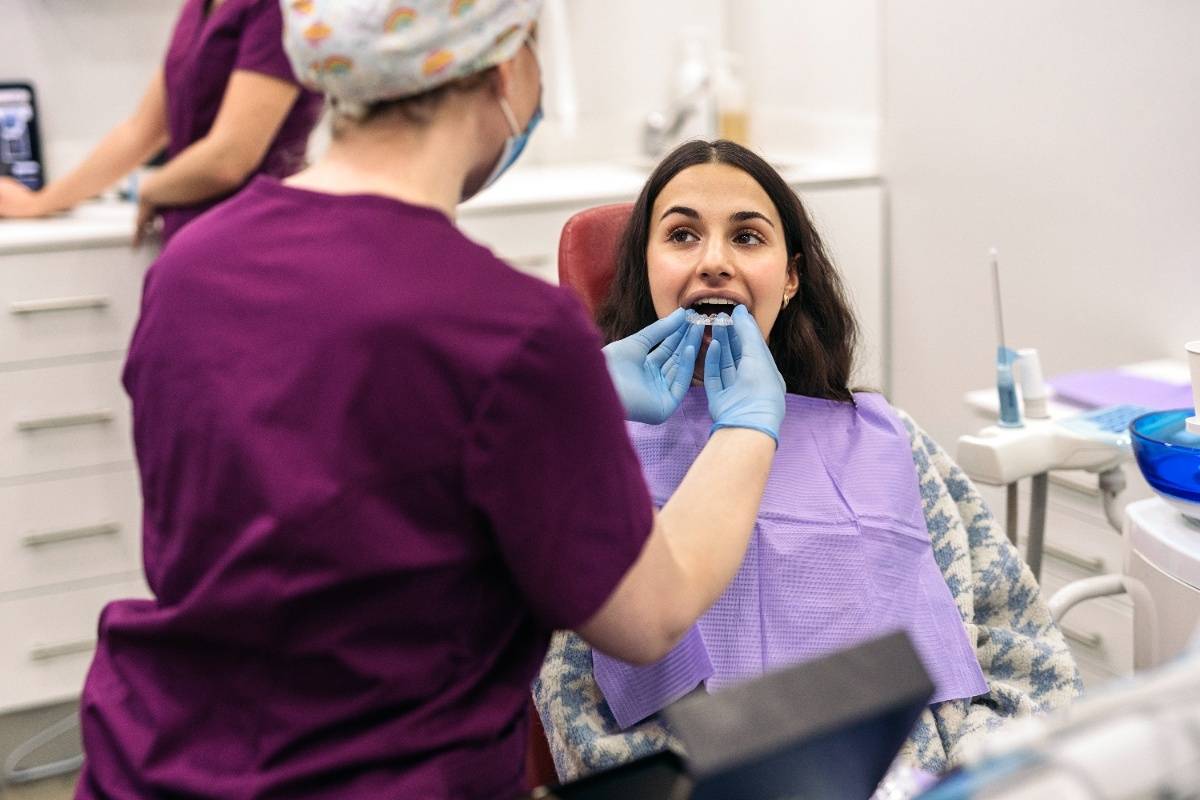


Hey there, parents! Let’s be real for a second: the “teen years” are already a whirlwind of growth spurts, social media trends, and late-night study sessions. The last thing your teen wants is a mouthful of metal right before prom or the big championship game. But then there’s that nagging question—can clear plastic trays actually do the same job as traditional braces?
If you’ve been scrolling through local dental reviews or debating the “brackets vs. aligners” dilemma over dinner, you aren’t alone. In fact, more than 3 million teenagers worldwide have already used the Invisalign system to transform their smiles.
Today, we’re breaking down everything you need to know about Invisalign for Teens: the hard data on safety, the lifestyle perks, and the clinical results that prove it’s more than just a “cosmetic” fix.
The Big Benefits: Why Teens (and Parents) Love It
When we talk about Invisalign in Dallas, the first thing people think of is the “invisible” factor. While aesthetics are a huge win, the benefits go far beyond looking good in selfies.
Confidence Without the “Brace Face”
It’s no secret that self-esteem is a big deal during adolescence. A 2024 study found that approximately 41% of teens consider wearing metal braces embarrassing. Invisalign’s nearly invisible design allows teens to undergo treatment without feeling self-conscious. In clinical surveys, females aged 14–18 reported feeling “attractive” more often while wearing Invisalign than with fixed metal appliances.
Zero Food Restrictions
With traditional braces in Dallas, the “forbidden foods” list is long: no popcorn, sticky candy, or crunchy apples. Because Invisalign aligners are removable, your teen can eat whatever they want. They pop the trays out, enjoy their meal, brush, and put them back in. This isn’t just a perk—it’s a major stress-reliever for busy families.
Better Oral Hygiene
Cleaning around wires and brackets is a marathon. Research shows that patients with clear aligners have significantly better periodontal health and lower plaque levels than those with braces. In fact, clear aligner users have a 10 times lower risk of developing white spot lesions (permanent tooth marks caused by plaque buildup).
Faster Adaptation and Fewer Appointments
Teens are busy! Studies indicate that the “adjustment period” for Invisalign is significantly shorter than for braces. Invisalign also often requires fewer office visits—typically every 10 to 12 weeks—compared to the 4- to 8-week cycle required to tighten metal wires.
Safety First: Is It Safe for a Growing Smile?
As a parent, your primary concern is safety. You might wonder if the plastic is safe or if moving teeth “too fast” is dangerous.
Medical-Grade Materials
Invisalign aligners are made from SmartTrack®, a medical-grade, BPA- and BPS-free thermoplastic. They are FDA-cleared and contain no latex or gluten, making them safe for long-term mouthwear.
Designed for Growth
Invisalign for Teens in Dallas isn’t just a smaller version of the adult product. It includes Eruption Tabs, specifically designed to hold space for permanent teeth that haven’t fully erupted yet. This allows the orthodontist to guide a teen’s smile even as their jaw continues to develop.
Lower Risk of Injury
For the student-athlete, Invisalign is a game-changer. Metal brackets can cause significant lacerations to the cheeks and lips during impact sports. Invisalign is smooth, and since it’s removable, teens can easily switch to a standard protective mouthguard during games or practice.
Real Results: What the Data Says
Success and switching rates
Recent analysis of large patient cohorts found that a measurable fraction of patients—about one in six (≈17%) in one study—switched from Invisalign to traditional braces during treatment. Reasons include the need for greater control of tooth movement or patient-specific response to aligner biomechanics. That means clear aligners suit many teen cases, but realistic expectations and an adaptable treatment plan (refinements, auxiliaries, or braces if needed) matter. Average treatment lengths reported in some series are roughly 22–23 months, though individual cases vary.
Patient satisfaction
Provider surveys and manufacturer-reported data indicate high satisfaction rates among users — many teens and parents prefer the aesthetics and comfort of aligners. Independent practice reports often cite satisfaction rates above 90% for appropriately selected cases, though outcomes depend heavily on compliance and careful case selection.
How quickly teens see changes
Some patients notice visible improvements in as little as 6 months for mild to moderate alignment issues, but full treatment often takes 12–24 months, depending on severity and growth. Again, strict adherence to wear time shortens timelines and reduces the need for refinements.
The “Compliance” Factor
The biggest concern for parents is: “Will my teen actually wear them?” Invisalign Teen aligners feature Blue Compliance Indicators—small blue dots that fade to clear as the aligner is worn. This gives parents and orthodontists a visual way to ensure the teen is hitting the required 20–22 hours of daily wear. Interestingly, clinical data suggest that teen compliance is often equal to, or even better than, adult compliance because teens are highly motivated to complete treatment quickly!
Budget, time, and insurance — practical numbers
Orthodontic costs vary widely by region and complexity. Typically, comprehensive orthodontic treatment in the U.S. is in a similar range. Still, Invisalign can be more or less expensive depending on provider pricing, complexity, and whether revisions/refinements are needed. Many dental insurance plans that cover orthodontics apply similar benefit limits to both braces and clear aligners—check your policy. Payment plans and in-office financing are commonly available at orthodontic practices.
Tips to maximize chances of great results
- Choose an experienced provider—a board-certified orthodontist in Dallas, TX. Book now with Dallas Orthodontics, which frequently treats teens and can better predict which cases are ideal for aligners.
- Commit to wearing time. Emphasize the 20–22 hour rule — even short lapses add up.
- Use the compliance features. The blue indicator dot is a practical tool to check wear.
- Maintain excellent oral hygiene. Brush and floss after meals before reinserting aligners.
- Follow up on refinements. Many aligner treatments require refinements (additional sets) to achieve the best outcome — that’s normal and part of modern orthodontics.
Conclusion — Is Invisalign right for your teen?
Invisalign Teen offers a powerful, discreet, and generally safe option for many adolescent orthodontic problems — especially mild-to-moderate crowding, spacing, and certain bite issues. The combination of removable aligners (easier hygiene), built-in compliance monitoring, and high patient satisfaction makes it appealing for image-conscious teens and busy families. However, it’s not a universal solution: complex skeletal problems or certain tooth movements sometimes require braces. The best route is an exam with a trusted orthodontic treatment provider in Dallas who will evaluate case complexity, discuss realistic timelines and costs, and outline the likelihood of refinements or switching to braces if necessary. If your teen is responsible enough to wear their aligners consistently, Invisalign can deliver excellent, confidence-boosting results.
FAQs
1. How long will my teen need to wear Invisalign?
Most cases require aligners to be worn 20–22 hours per day, with total treatment varying from ~6 months (very mild cases) to 18–24 months or more for more complex corrections. Average times reported in some studies cluster around 18–24 months.
2. Are Invisalign aligners painful for teens?
Teens may feel mild pressure or soreness when switching to a new tray — similar to what they think after a braces adjustment. Surveys indicate many patients rate aligners as more comfortable than metal braces. With proper management, pain is usually brief and can be managed with over-the-counter analgesics if needed.
3. What happens if my teen doesn’t wear the aligners enough?
Insufficient wear reduces the effectiveness of the prescribed tooth movements and can lengthen treatment, require additional refinements, or, in some cases, lead the provider to recommend braces. Compliance is the single biggest behavioral predictor of success.
4. Can Invisalign fix bite/jaw problems?
Aligners can address some bite issues, but significant skeletal (jaw) discrepancies often require growth modification appliances or braces, and sometimes surgical intervention. An evaluation by an orthodontist in Dallas, TX, will determine whether aligners alone can achieve the planned result.
5. How do I choose the right provider?
Look for a provider with experience treating teens with aligners, ask to see before-and-after cases similar to your teen’s concern, confirm they use 3D scans and digital treatment planning, and discuss their policy on refinements and what percentage of their aligner patients eventually require braces. A clear, honest treatment plan and warranty/guarantee policy are good signs.