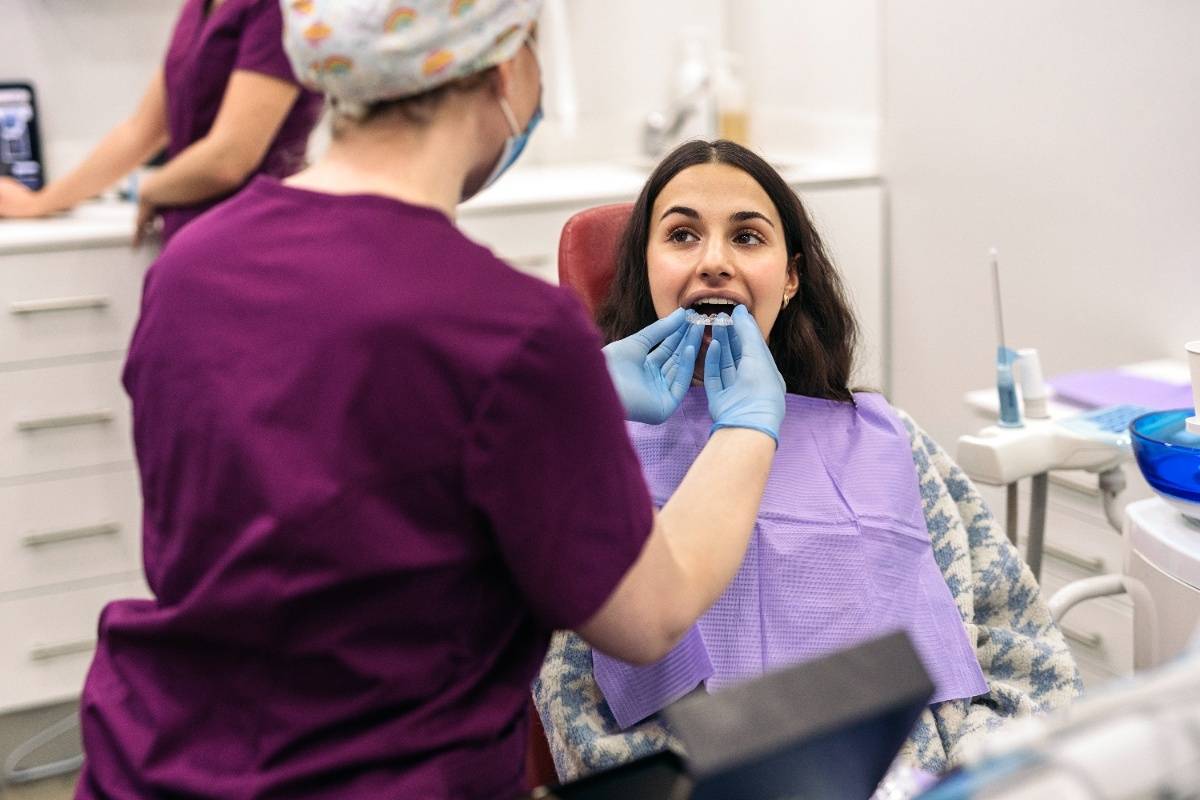

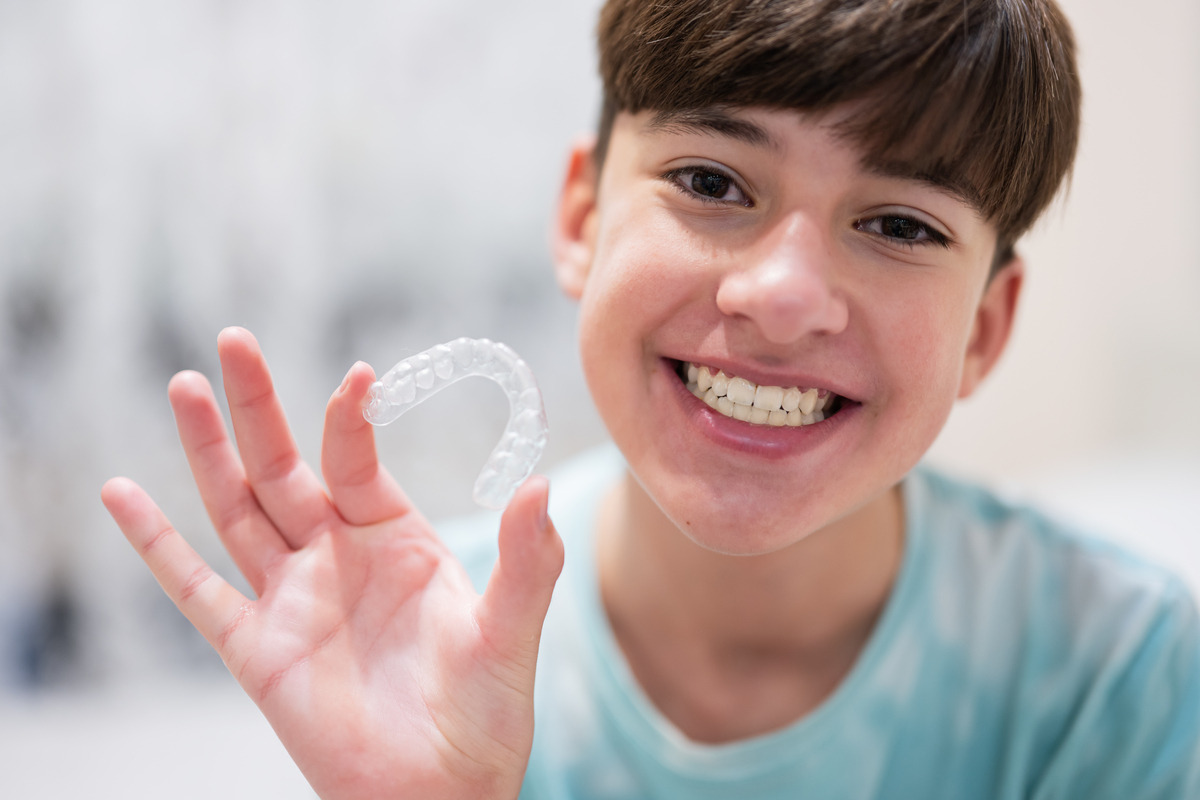
Whether you’re just starting your smile journey or you’re a few trays in, there is one question that every patient asks: “Do I really have to wear these for 22 hours?“ It sounds like a lot, right? That only leaves two hours for eating, drinking, and everything else!
If you’ve ever wondered why that “magic number” matters—or what actually happens to your teeth during those two hours they’re out—you are in the right place. We’re diving into the hard data and clinical science behind Invisalign wear time to show you exactly how to get the fastest, best results for your smile.
How Long Do You Really Need to Wear Invisalign Each Day?
For the vast majority of patients in the United States, the clinical recommendation is 20 to 22 hours per day. While that might feel restrictive at first, this window is backed by significant orthodontic research.
The Science of Bone Remodeling
To understand the “why” behind the hours, we have to look at biology. Moving teeth isn’t just about “pushing” them; it’s a biological process called bone remodeling.
- Osteoclasts: These cells break down bone in the direction the tooth is moving.
- Osteoblasts: These cells build new bone behind the tooth to anchor it in its new spot.
Research indicates that effective bone remodeling requires at least 20 hours of continuous force per day to keep these cells active. According to studies in the Journal of Orofacial Orthopedics, if you wear your aligners for less than 18 hours, the remodeling process becomes inefficient and unpredictable, often causing the bone to “stall”.
Why Wearing Invisalign 22 Hours a Day Matters
Continuous Pressure Drives Tooth Movement
Invisalign Dallas works by applying gentle, consistent force to your teeth.
Each aligner is designed to move teeth by tiny increments—typically around 0.25 mm per tray.
If you remove your aligners too often:
- The pressure stops
- Teeth pause movement
- They may even shift backward
Your Teeth Have “Memory.”
Teeth naturally want to return to their original position. This is sometimes called the elastic effect.
That’s why consistency matters more than anything else.
Better Compliance = Faster Results
Studies show that patients who wear aligners 22+ hours daily:
- Experience fewer fitting issues (“tracking errors”)
- Require fewer adjustments or refinements
- Finish treatment on schedule
What Happens If You Don’t Wear Invisalign Enough?
Let’s be real—life gets busy. But cutting corners can cost you.
Here’s what happens if you consistently wear your aligners less than 20 hours per day:
Delayed Treatment
Your overall treatment time may extend beyond the planned timeline.
Poor Fit (Tracking Issues)
Aligners may stop fitting snugly because your teeth haven’t moved as expected.
More Dental Visits
You may need:
- Additional aligners
- Mid-course corrections
- Extra orthodontic appointments
Compromised Results
In severe cases, your final smile may not match the original treatment plan.
Is 20 Hours Enough—or Should You Aim for 22?
This is one of the most common questions patients ask.
20 Hours: The Practical Minimum
- Still effective for many patients
- Acceptable if occasional
22 Hours: The Gold Standard
- Faster, more predictable results
- Fewer complications
Think of it like this:
20 hours keep you moving forward.
22 hours keeps you on schedule.
Invisalign Is a “Compliance-Based” Treatment
Unlike traditional braces, Invisalign is removable—which is both a benefit and a responsibility.
A certified Orthodontist in Dallas calls Invisalign a “compliance-based treatment”, meaning:
Your results depend heavily on how consistently you wear your aligners.
This is why two patients with the same case can have very different outcomes.
Tips to Help You Hit 22 Hours a Day
Struggling to keep your aligners in long enough? You’re not alone. Here are proven strategies:
Follow the “Eat, Brush, Insert” Routine
- Eat meals quickly (within 30 minutes)
- Brush immediately
- Put aligners back in right away
Limit Snacking
Frequent snacking = more time without aligners.
Track Your Wear Time
Apps like TrayMinder can help you stay accountable.
Keep a Travel Kit
Carry:
- Toothbrush
- Toothpaste
- Aligner case
So you’re never tempted to leave them out.
Make Nighttime Count
Wearing aligners overnight gives you 6–8 uninterrupted hours of progress.
How Long Does Invisalign Treatment Take Overall?
While daily wear time is crucial, total treatment duration varies.
On average:
- Mild cases: 6–12 months
- Moderate cases: 12–18 months
- Complex cases: 18–24+ months
The more consistently you wear your aligners, the closer you’ll stay to your original timeline.
Conclusion
So, how long do you really need to wear Invisalign each day?
The honest answer: As close to 22 hours as possible.
While 20 hours may still work, every extra hour you wear your aligners:
- Improves accuracy
- Speeds up results
- Reduces complications
Invisalign is one of the most convenient orthodontic options available—but it only works if you commit to wearing it consistently.
If you’re willing to stick to the schedule, the reward is a straighter, healthier smile—often faster than you expect.
Frequently Asked Questions
1. Can I wear Invisalign only at night?
No. Wearing aligners only at night (8–10 hours) is not enough to move teeth effectively. You need at least 20 hours daily.
2. What happens if I forget to wear my Invisalign for a day?
Missing one day occasionally may not ruin your progress, but frequent lapses can delay treatment and cause fit issues.
3. Is it okay to wear Invisalign for 21 hours a day?
Yes, 21 hours is generally acceptable. However, orthodontists still recommend aiming for 22 hours whenever possible.
4. Can I drink coffee with Invisalign in?
Only plain water is recommended while wearing aligners. Remove them for coffee to avoid staining and warping.
5. Will wearing Invisalign longer than 22 hours speed up results?
Not significantly. Tooth movement depends on biology, not just time. But staying close to 22 hours ensures optimal progress.