
So, you’ve finally taken the plunge into the world of orthodontics! Whether you’re a teen rocking traditional metal brackets or an adult joining the 32% of orthodontic patients who are now over the age of 18 (Empower, 2025), congratulations. You’re on the path to a Hollywood-ready smile.
But here’s the reality check: your braces are basically “plaque magnets.” They have more nooks and crannies than a sourdough English muffin, and if you aren’t careful, you might end up with “white spots” or cavities once the brackets come off.
Are you brushing correctly? Is your flossing game strong enough to bypass those wires? Let’s dive into the expert-approved blueprint for keeping your hardware—and your smile—crystal clear.
Why Cleaning Braces Matters?
When you have braces, plaque — that sticky film of bacteria — builds up around every bracket and wire. Unlike clean teeth, these appliances give plaque extra places to cling, which raises your risk of:
- Dental cavities — up to nearly half of braces patients develop new caries lesions during treatment without strong hygiene.
- White spot lesions — early signs of permanent enamel damage.
- Gum inflammation (gingivitis) — braces can trap plaque near the gumline.
That means brushing and flossing as you used to just isn’t enough. You need techniques and tools designed to clean around all the orthodontic hardware.
The Orthodontist’s Step-by-Step Cleaning Routine
Orthodontists say the best cleaning routine includes multiple steps — a combo that keeps both hardware and teeth healthy.
Here’s the expert-approved daily protocol:
Brush After Every Meal
This isn’t optional — food gets trapped in wires and brackets fast.
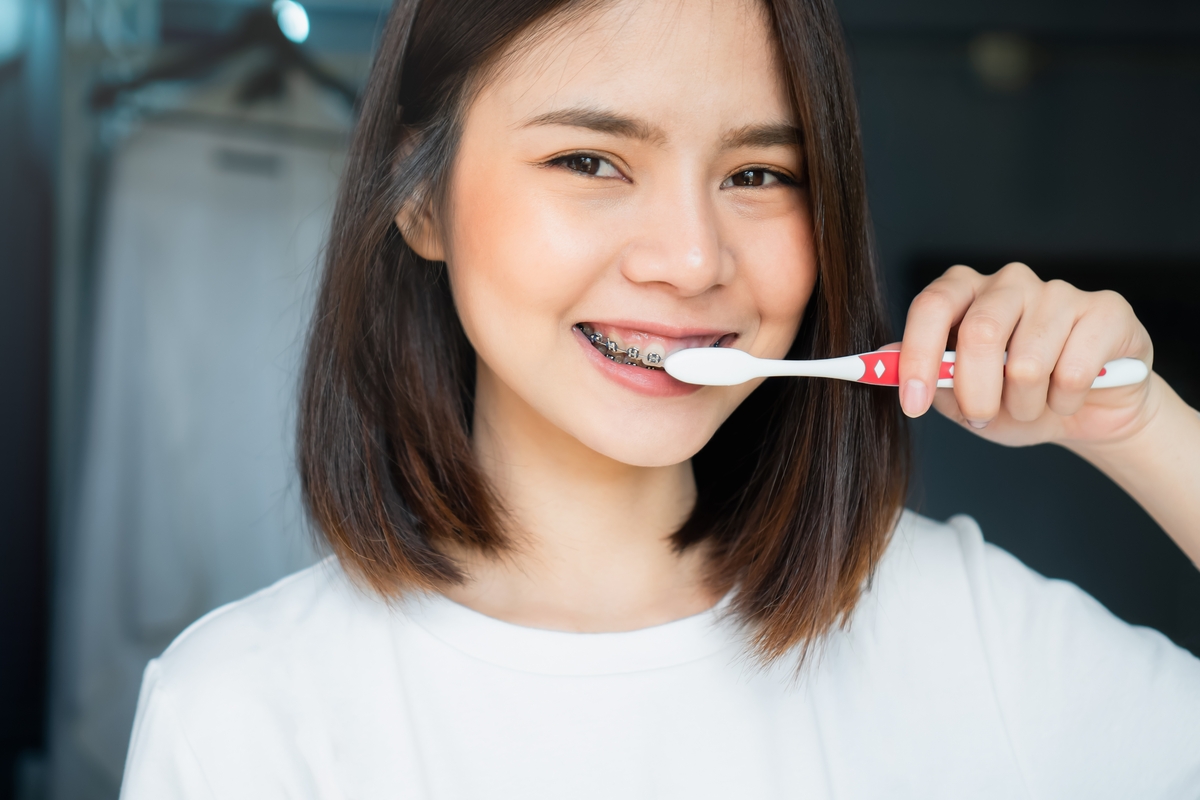
- Use a soft-bristled toothbrush or an electric toothbrush with orthodontic bristles.
- Brush for at least 2 minutes, covering all sides of every tooth. help eradicate food debris that hides near brackets.
Tip: Hold your brush at a 45-degree angle above and below each bracket to reach hidden plaque.
Don’t Skip the Flossing
Flossing is critical — and it works even with braces.
Tools that help:
- Floss threaders — guide regular floss under wires
- Orthodontic floss — pre-threaded for ease
- Water flossers (oral irrigators) — powerful jets remove trapped food and plaque around brackets more effectively for some people.
Orthodontist tip: The ADA recommends flossing at least once a day to remove plaque between teeth that a toothbrush can’t reach.
Use Interdental or Proxy Brushes
These tiny cone brushes slide between wires and brackets and reach places a regular toothbrush just can’t.
Interdental brushes make cleaning 40% more effective in reducing plaque buildup around braces.
Carry one in your bag for brushing after lunch or snacks!
Rinse with Mouthwash
Finish with an alcohol-free fluoride mouthwash to:
- Strengthen enamel
- Kill leftover bacteria
- Reach areas your brushes missed
Swish for about 30–60 seconds after brushing and flossing for best results.
Foods That Help (and Foods That Hurt)
Your diet plays a huge role in braces care — certified orthodontists in Dallas always talk about diet first!
Foods to Avoid
Certain foods either get stuck or damage your braces:
- Sticky & chewy sweets (gum, caramel, gummies)
- Hard nuts, crunchy chips
- Ice cubes, popcorn kernels
These foods can break brackets, loosen wires, or contribute to plaque buildup that’s much harder to remove.
Braces-Friendly Food Choices
Instead, reach for:
- Soft fruits and cooked veggies
- Yogurt, cheese, and other dairy
- Sliced or cooked meats and grains
These are easier to clean off your braces and gentler on your brackets.
Daily and On-the-Go Hygiene Hacks
Staying clean isn’t just at home — orthodontists recommend:
- Mini braces kit for school or work (tiny toothbrush, interdental brush, floss picks)
- Rinse with water immediately after eating if you can’t brush right away
- Check in the mirror after meals to spot trapped food and address it right away
Even a quick rinse or brush can prevent plaque buildup later.
Professional Cleanings & Check-Ins
Home care is essential, but professional visits matter too. Most orthodontists suggest:
- Check-ins every 6–8 weeks
- Professional cleanings every 3–6 months
These visits help remove tartar and plaque you can’t reach on your own, keeping your treatment on track.
Common Mistakes Orthodontists See
Even great intentions can go wrong. Avoid these pitfalls:
- Brushing too hard (irritates gums)
- Skipping flossing entirely
- Relying only on a mirror without checking behind the wires
- Eating sugary drinks that sit around for hours
Breaking these habits keeps your smile healthier and your treatment faster.
Conclusion
Cleaning modern braces isn’t just a routine — it’s an essential daily investment in your smile.
With roughly 4 million Americans wearing braces at any time and many adults joining the trend, proper hygiene practices aren’t just for kids anymore.
By brushing after meals, using interdental tools, flossing daily, making smart food choices, and keeping up with orthodontic visits, you protect your teeth and help your treatment progress more quickly and effectively.
And remember: your orthodontist wants you to succeed — follow their personalized tips, and your future smile will reward you for years to come!
Frequently Asked Questions
1. How often should I brush my teeth with braces?
You should brush after every meal — ideally 3 times a day — plus floss once daily to stay ahead of plaque buildup.
2. Are water flossers better than string floss with braces?
Water flossers are excellent for loosening trapped debris and are easier for some to use, but they work best in addition to regular flossing or threader flossing.
3. Can braces cause cavities?
Yes — fixed braces increase plaque retention sites, and studies show a notable rise in new caries lesions among patients without effective hygiene.
4. What foods should I definitely avoid with braces?
Avoid sticky, hard, or chewy foods like gum, caramel, popcorn kernels, and nuts — they can get stuck in brackets, damage them, and make cleaning harder.
5. How often should I see my orthodontist during treatment?
Most orthodontists recommend check-ups every 6–8 weeks and professional cleanings every few months to monitor oral hygiene.